The Challenge
After a strategic pivot from NoBotz to TestBooster, the company repositioned itself from a “no-code” consumer tool to an enterprise platform targeted at technical users (QA Engineers, Developers, DevOps teams).
Technical users needed to navigate between multiple test types, configure complex automations, and monitor executions in real-time. The lack of clear hierarchy and absence of visual feedback turned simple tasks into confusing processes.
The challenge was to create a professional experience that respected the technical complexity of the product without transferring it to the interface. Organize 40 screens, 3 distinct test types, and multiple execution states into an enterprise-ready structure. Transform technical power into visual clarity and market credibility.
Architecture and Flows
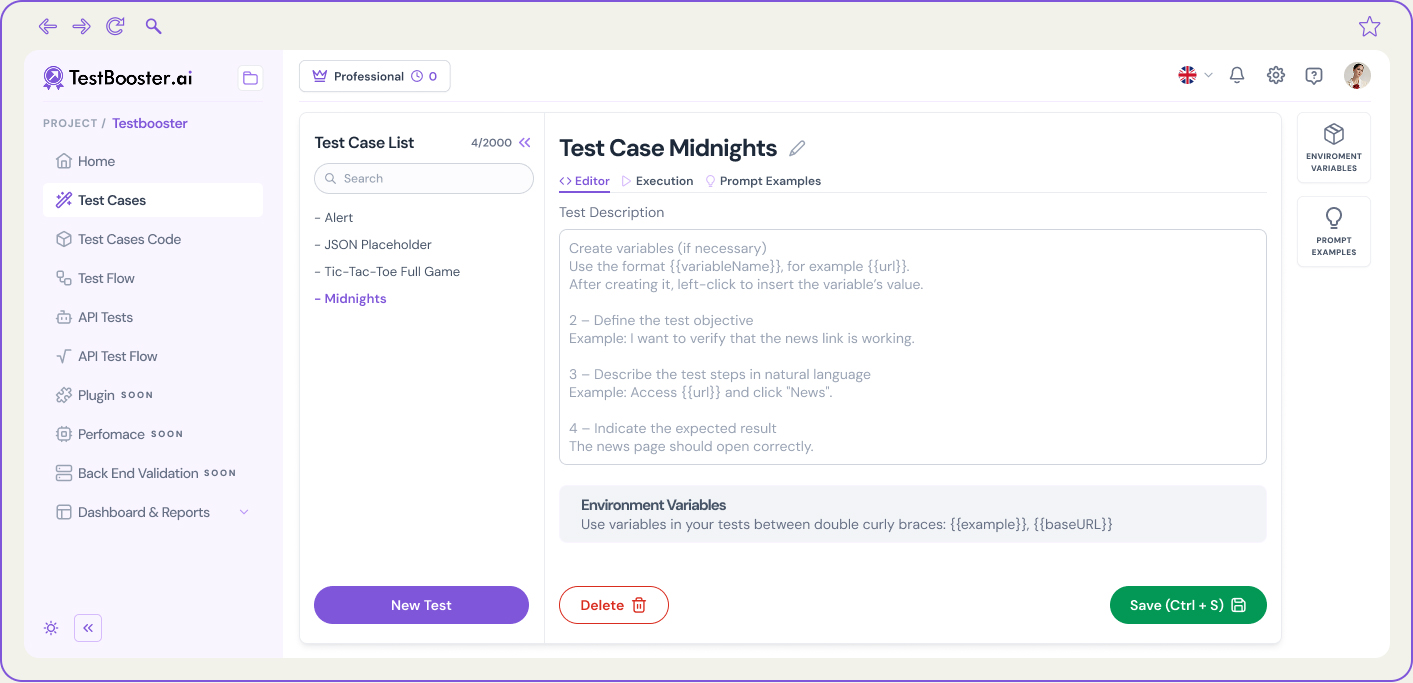
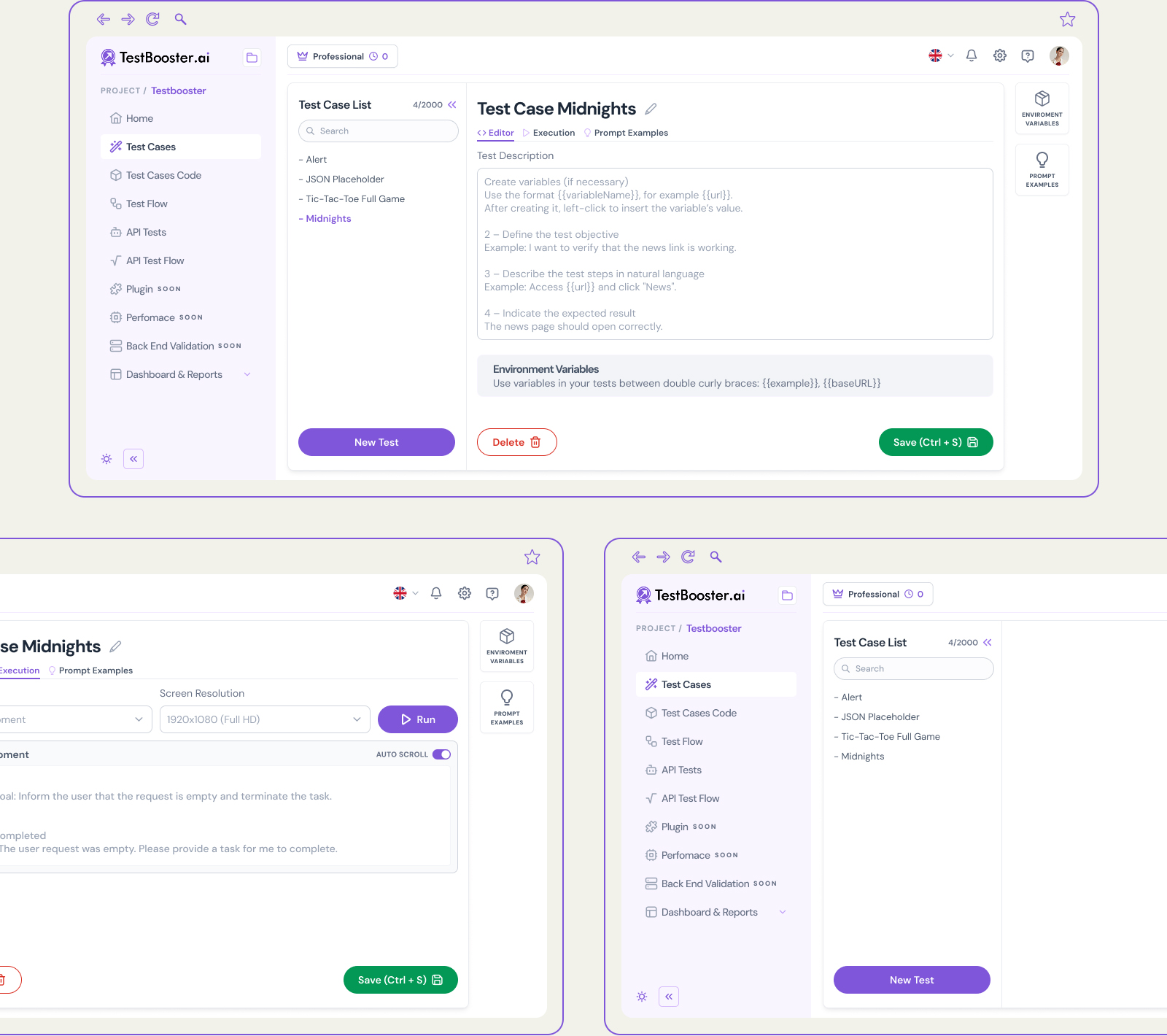
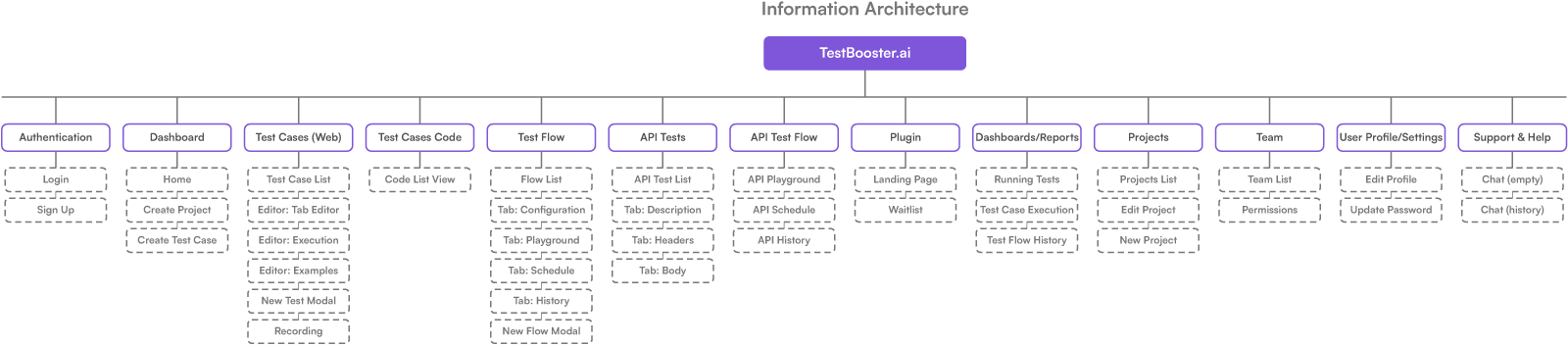
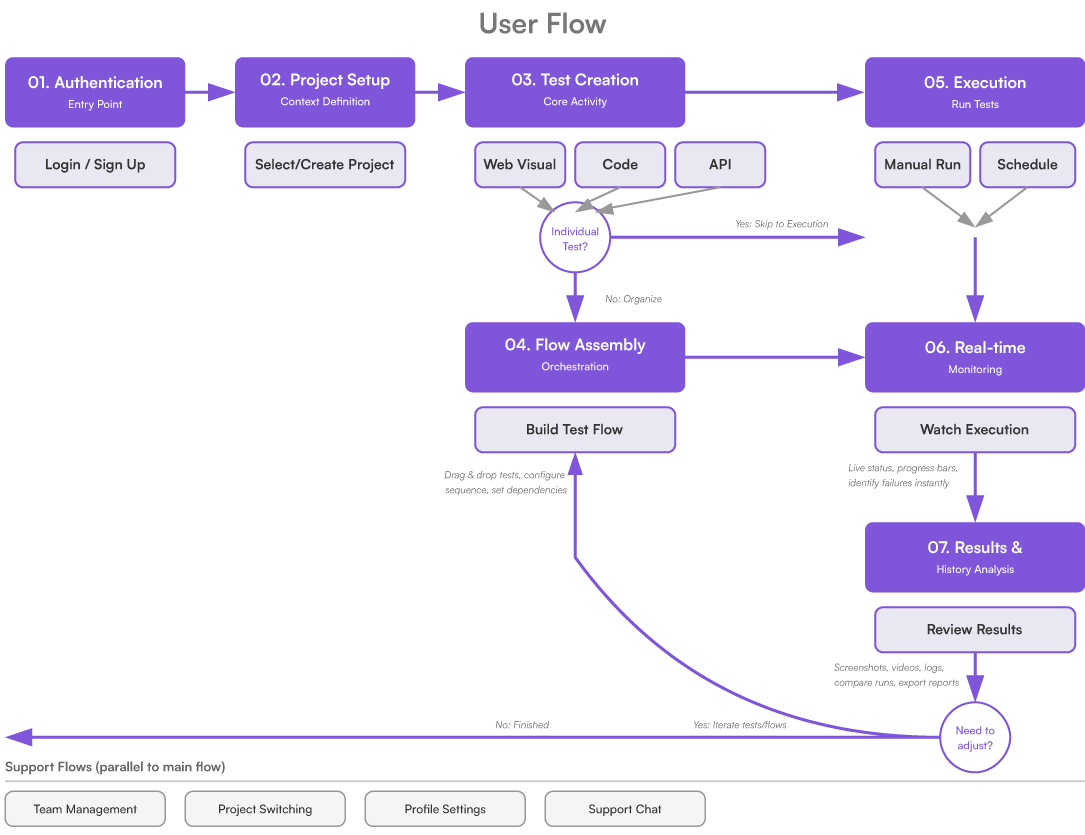
I mapped the 40 screens into 12 functional modules: Authentication, Dashboard, Test Cases, Test Code, Test Flow, API Tests, API Flow, Plugin, Execution dashboards, Projects, Team, and Profile. Each module follows consistent patterns: list → editor → execution → results.
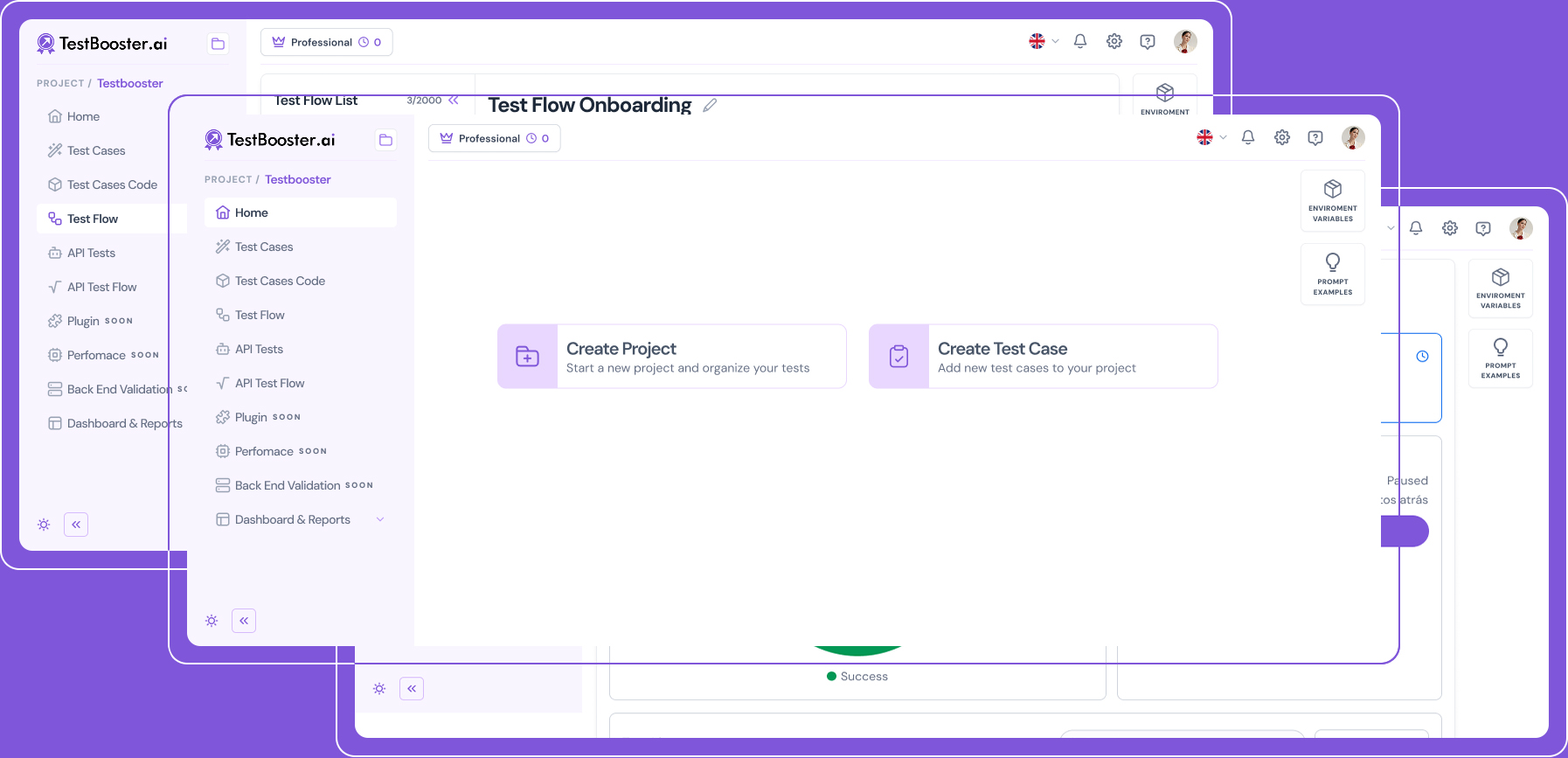
The architecture supports three parallel journeys (UI testing, API testing, Flow orchestration) without overlap or confusion. I created a navigation system that maintains context: persistent sidebar, clear breadcrumbs, visual states that indicate where the user is and what they can do next. Test Flows gained a drag-and-drop interface for visual orchestration of sequential tests.
Design
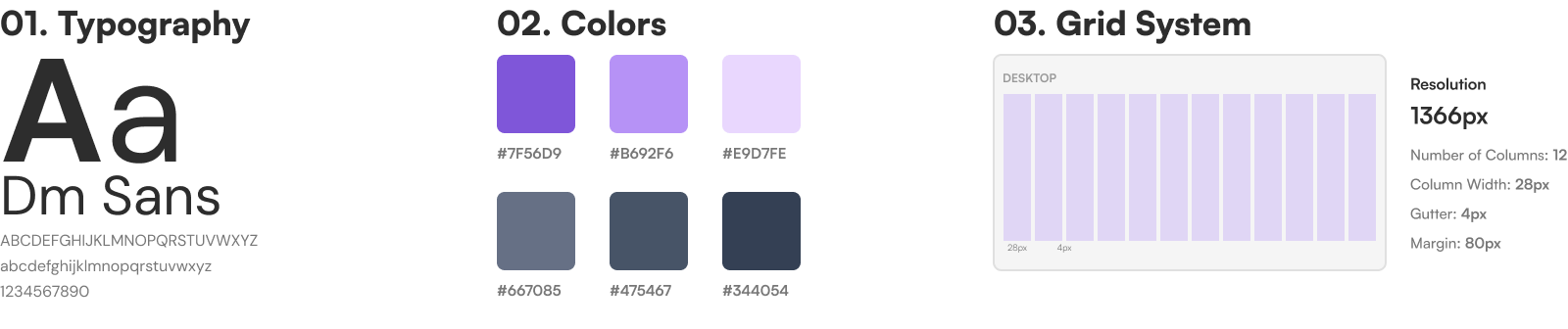
The design prioritizes technical clarity and enterprise credibility. Purple as the primary color establishes a professional tech identity, complemented by status colors that instantly communicate execution states. The palette was built to support high information density without creating visual noise.
Modular and reusable components ensure consistency across all 40 screens. The drag-and-drop interface for Test Flows simplifies complex orchestration through direct visual manipulation. Dashboards combine data visualization (donut charts, metrics, tables) with fluid interaction. Every element was designed to scale: the design system supports new modules and features while maintaining cohesion and professionalism.
Results
The redesign transformed a technical tool into a professional and scalable platform. The modular architecture allows growth without loss of consistency. The drag-and-drop interface simplified the creation of complex flows. Monitoring dashboards provide complete visibility over ongoing executions. The project demonstrates the ability to work with complex enterprise systems, multiple parallel user flows, and high information density interfaces while maintaining clarity and usability.